Humanistic Economics Promotes the Integration of Culture and Commerce in Macao
During the 2023 “Two Sessions,” President Xi Jinping put forward an important thesis while deliberating with the Jiangsu delegation: “As the saying goes, ‘Above there is heaven; below there are Suzhou and Hangzhou.’ Suzhou and Hangzhou are both cities at the forefront of economic development. Where culture flourishes, the economy can also lead. The humanistic economics embodied in this is worth studying.” This statement highlights the underlying logic of culture and the economy reinforcing each other and thriving together, pointing the way for high-quality development across regions. At its core, humanistic economics is about opening a two-way path between the “economization of culture” and the “culturalization of the economy”: on one hand, transforming cultural resources into industries, capital, and markets; on the other, infusing commerce and industry with humanistic substance, raising both economic quality and urban value in tandem.
Looking back over Macao's more than four centuries of development, this is a unique city where land and sea meet and Chinese and Western cultures blend. Backed by the motherland and connected to the Portuguese-speaking countries, it naturally serves as a hub for cultural exchange between China and the wider world and for cross-border commerce. Viewed through the lens of humanistic economics, culture has never been a mere decoration of Macao's commercial development; it is the deep foundation on which business takes root and grows sustainably. The path by which culture propels commerce and Chinese and Western civilizations learn from each other in coexistence is both the inner fabric of Macao's century-long prosperity and the core strategy for the SAR to advance appropriately diversified economic growth and upgrade the city.
A Sino-Western Humanistic Heritage: Macao's Unique Core Asset for Commerce
Humanistic economics holds that humanistic factors such as cultural traditions, values, and social trust are not merely a “lubricant” for economic development but a core driving force for the long-term growth of industries.
Macao shares the same roots as the mainland. Fine traditional Chinese culture is deeply woven into the city's folk customs, street life, and business climate, nurturing a local business ethos of inclusiveness, integrity, pragmatism, and mutual benefit. The maritime trading civilization embodied by the A-Ma Temple and the Lingnan folk traditions passed down through generations run through Macao's centuries of commercial history. Traditional culture advocates harmony, connectivity, and mutually beneficial coexistence—an ethos that dovetails with the logic of cross-border economic and trade cooperation between China and the Portuguese-speaking countries, giving Macao irreplaceable cultural soft power and a foundation of cooperative trust in regional commercial competition.
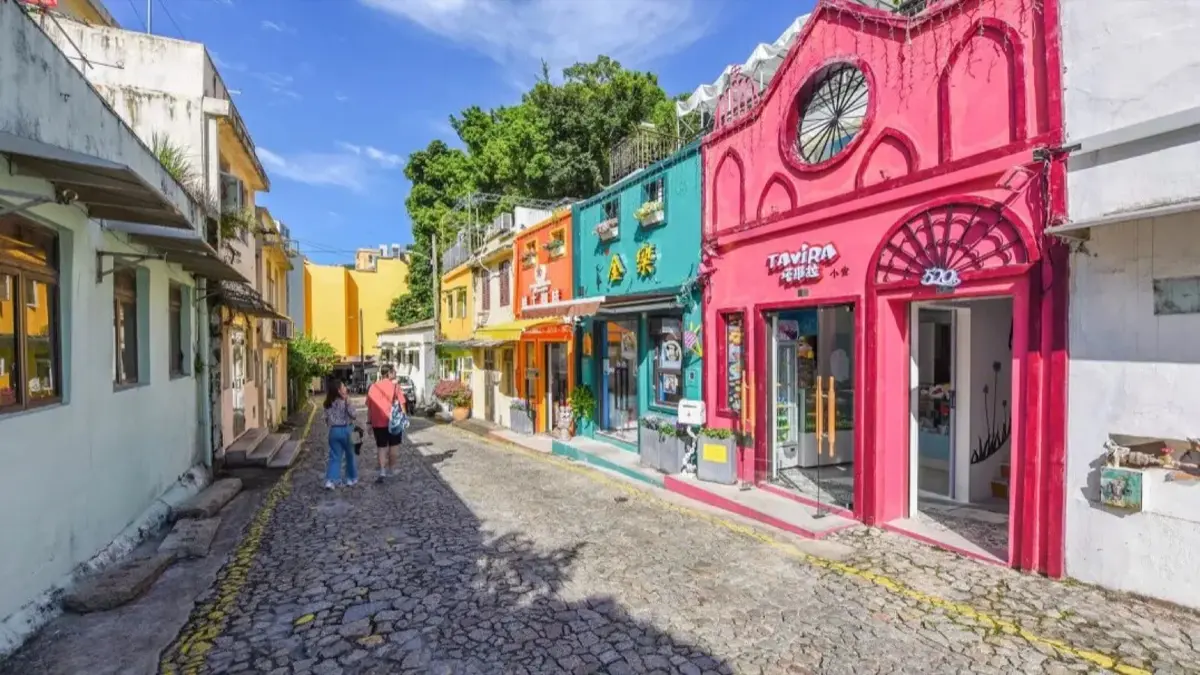
At the same time, Macao is one of the few places in China where Chinese and Western civilizations have long coexisted. It combines the inclusive character of Chinese culture with the cultural traits of the Portuguese-speaking countries, compounded by unique institutional advantages such as its free-port status, separate customs territory, and multilingual services. Traditional Chinese residences and European-style streets coexist in a picturesque patchwork; Lingnan festivals and Portuguese customs set each other off, forging an open and inclusive urban temperament that effectively dissolves cultural estrangement and communication barriers in cross-border trade. This dual cultural endowment is Macao's one-of-a-kind resource advantage for practicing humanistic economics and developing distinctive commerce.
The Economization of Culture: Turning Cultural Heritage into Momentum for Industrial Growth
The first layer of humanistic economics is to advance the “economization of culture”—transforming static historical heritage into commercial formats that can be operated and appreciated in value.
Drawing on quality cultural resources such as the World Heritage-listed Historic Centre of Macao, intangible cultural heritage crafts, and traditional festivals, the SAR has cultivated emerging industries including distinctive cultural tourism, cultural-creative design, and Sino-Portuguese festival conventions and exhibitions, turning cultural resources into tangible economic momentum. During events such as Chinese New Year, the Dragon Boat Festival, the Mid-Autumn Festival, and Portuguese folk dance galas, commercial districts jointly stage folk performances and trade promotions; intangible-heritage handicrafts, Lingnan cultural-creative products, and Macao's signature cuisine are both calling cards of the city's cultural tourism and distinctive goods exported to the Portuguese-speaking countries.
The SAR regularly hosts the China-Portuguese Cultural and Arts Festival, a series of culture weeks, and artistic performances, using people-to-people cultural exchange to build flexible bridges of communication and open multi-level channels connecting government, enterprises, and civil society, thereby accumulating long-term, stable trust in cooperation for cross-border investment and merchandise trade. Compared with traditional single-track goods trade, Macao has now extended into deeper cooperation models such as brand co-building, market sharing, culture-tourism linkage, and industrial coordination.
This development model—“culture drawing in the crowds, commerce taking root, industries upgrading”—continues to optimize Macao's industrial structure and inject lasting vitality into the city's development as a world centre of tourism and leisure.
The Culturalization of the Economy: Elevating the Value of the Sino-Portuguese Trade Platform with Humanistic Substance
The second layer of humanistic economics is to achieve the “culturalization of the economy”—embedding a humanistic core in all kinds of economic activities and enhancing the comprehensive value of the trade platform through culture.
At the practical level of industry, Macao, on one hand, deeply cultivates fine traditional Chinese culture—revitalizing intangible-heritage crafts, traditional aesthetics, and folk resources and integrating them into cultural-creative development, high-end cultural tourism, and convention, exhibition, and sporting events—to build city intellectual properties (IPs) that combine Macao's distinct identity with the core of Chinese culture, and, through the Sino-Portuguese platform, helps local cultural-creative products and Chinese-characteristic goods reach Portuguese-speaking markets. On the other hand, it absorbs mature international experience in brand operation and business management, continuously improves cross-border commerce, the convention-and-exhibition economy, and business support services, and constantly strengthens the professionalism and internationalization of the Sino-Portuguese platform.
Humanistic economics puts people at the centre, breaking free from the limitations of simply chasing capital and “valuing goods over humanity.” Macao's practice of culture-business integration precisely unifies citizens' cultural needs with the city's economic development: cultural venues and intangible-heritage bases not only carry on the local cultural lineage but also become important vehicles for optimizing commercial services and expanding external cooperation. The SAR government is planning to advance the Macao International Integrated Tourism and Culture Zone, integrating diverse resources of World Heritage, intangible heritage, folk customs, and commercial services to create new culture-tourism consumption scenarios that blend East and West. This will drive cross-sector integration of culture, commerce, tourism, and technological innovation, delivering a two-way win: cultural transmission and cultural benefit for the people on one side, industrial income growth and urban upgrading on the other.
Culture and Commerce in Symbiosis: Macao's Practice Vividly Illustrates Humanistic Economics
The harmonious coexistence of diverse cultures lays a solid foundation of social consensus and cooperation for Macao's commercial development. With Chinese culture as the mainstream, Macao embraces cultures from around the world, forming a social atmosphere of harmony, pragmatism, openness, and shared success. Regular Sino-Western cultural exchanges and cross-border business travel continuously strengthen Macao's cultural ties, economic bonds, and emotional identification with the mainland.
Relying on the Commercial and Trade Cooperation Service Platform between China and Portuguese-speaking Countries, Macao both helps quality goods and cultural-creative resources from the Greater Bay Area explore markets in the Portuguese-speaking countries and introduces new business formats and ideas from overseas to feed back into the upgrading of industries in the Bay Area and Macao itself—building a virtuous circle of culture-commerce linkage, internal-external connectivity, and mutual benefit. This is a living illustration of the interplay between culture and the economy that humanistic economics describes.
Grounded in the present with an eye on the long term, Macao should continue to tap its unique strengths in culture-business integration and Sino-Western blending, amplifying the catalytic effect of culture on commerce and industry. Efforts can be sustained on three fronts:
First, deepen the cultivation of China's local cultural heritage, revitalize World Heritage and intangible heritage resources, and develop cultural tourism, cultural-creative, and convention-and-exhibition products that combine cultural depth with market competitiveness, consolidating the humanistic foundation of commercial development;
Second, leverage Macao's unique advantage in cross-cultural communication, deepen economic, trade, and people-to-people exchanges between China and the Portuguese-speaking countries, improve the cross-border trade service system, and continuously enhance the international influence of the Sino-Portuguese platform;
Third, accelerate the deep integration of culture with diverse industries, foster new business formats, enrich the industrial structure, and steadily deliver on the goal of appropriately diversified economic development.
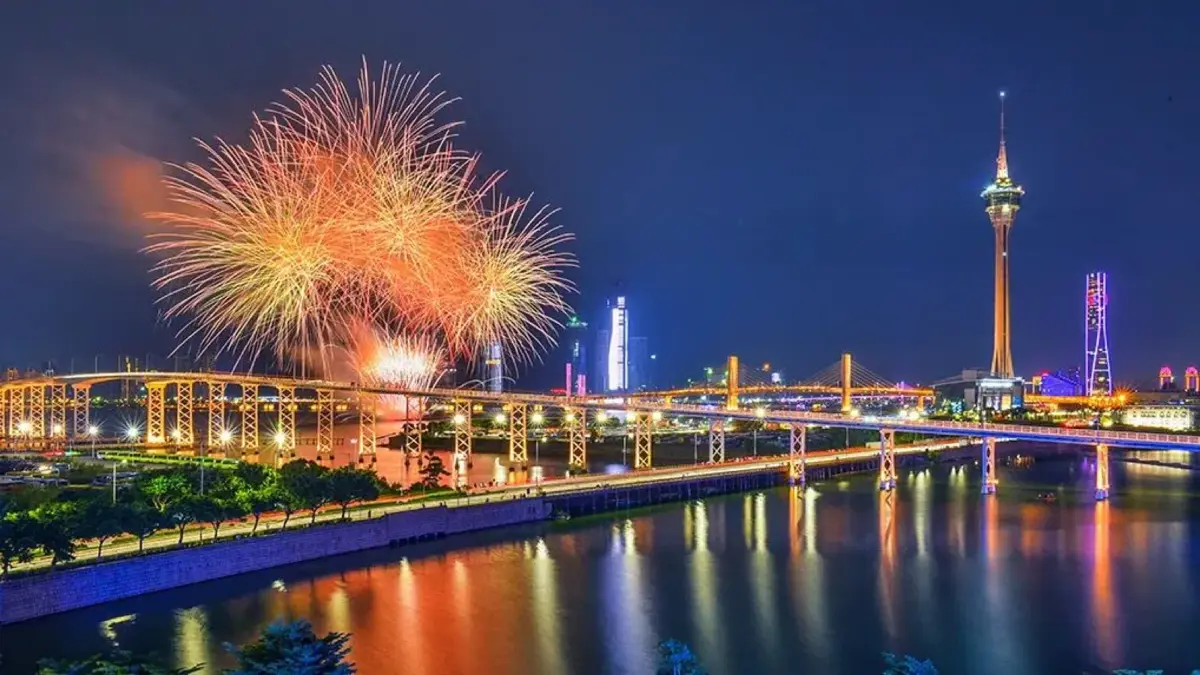
A centuries-long urban cultural lineage endows Macao with warmth; the distinctive character of Sino-Western blending activates new development opportunities. The culture of coexistence accumulated over more than four centuries is Macao's unique urban asset and core competitiveness. As President Xi Jinping has pointed out, humanistic economics is the unity of the economization of culture and the culturalization of the economy; its essence lies in the interplay and coordinated development of culture and the economy. The 2026 Global Humanities Forum will be held in Macao in December, and this high-level international platform for humanistic dialogue will also bring fresh intellectual inspiration and opportunities for external cooperation to Macao's exploration of humanistic economics in practice.
In the new era, Macao should take humanistic economics as its guide, hold fast to its cultural roots, make good use of its platform advantages, and deepen the path of culture-business integration, polishing the golden signboard of Sino-Portuguese commercial cooperation. In deepening local development, connecting with the Guangdong-Hong Kong-Macao Greater Bay Area, and reaching the markets of the Portuguese-speaking countries, Macao will forge a high-quality development path with its own characteristics—“a city thriving on culture and prospering through commerce”—and, with the vivid practice of the SAR, write a distinctly Macao footnote to this important theory of humanistic economics.